If you are selling a luxury home in Castle Rock or Sedalia, pricing it right from the start can shape your entire result. In high-end markets, buyers are not just comparing square footage. They are weighing privacy, land, views, setting, condition, and how your property stacks up against a small pool of serious alternatives. This guide will show you how strategic pricing works in these two distinct markets and why a custom approach matters more than a generic estimate. Let’s dive in.
Why pricing matters more in luxury
Luxury pricing is not about picking a number that simply sounds strong. It is about matching your home to the buyer pool most likely to act, while protecting your position in a market where buyers tend to study details closely.
In Castle Rock, the broader market still shows healthy demand. As of June 2026, Realtor.com reported 857 homes for sale, a median listing price of $730,000, a median sold price of $690,000, 43 median days on market, and a 99% sale-to-list ratio. That tells you buyers are active, but homes still need to enter the market at a price that feels justified.
Sedalia requires even more precision. Realtor.com reported 58 homes for sale in June 2026, with a median listing price of $1.875 million, a median sold price of $979,500, 72 median days on market, and a 95% sale-to-list ratio. In a smaller, estate-heavy market like this, pricing too high can quickly narrow your buyer pool.
Castle Rock and Sedalia are different markets
One of the biggest pricing mistakes is treating Castle Rock and Sedalia as if they behave the same way. They do not. Each market has its own pace, inventory mix, and buyer expectations.
Castle Rock is a growing town with strong lifestyle appeal. The Census Bureau estimated 83,213 residents as of July 1, 2024, up 13.7% from the 2020 census. The town also highlights 55 parks, 110 miles of trails, and more than 6,680 acres of preserved open space, which helps explain why location and lifestyle continue to matter at the upper end of the market.
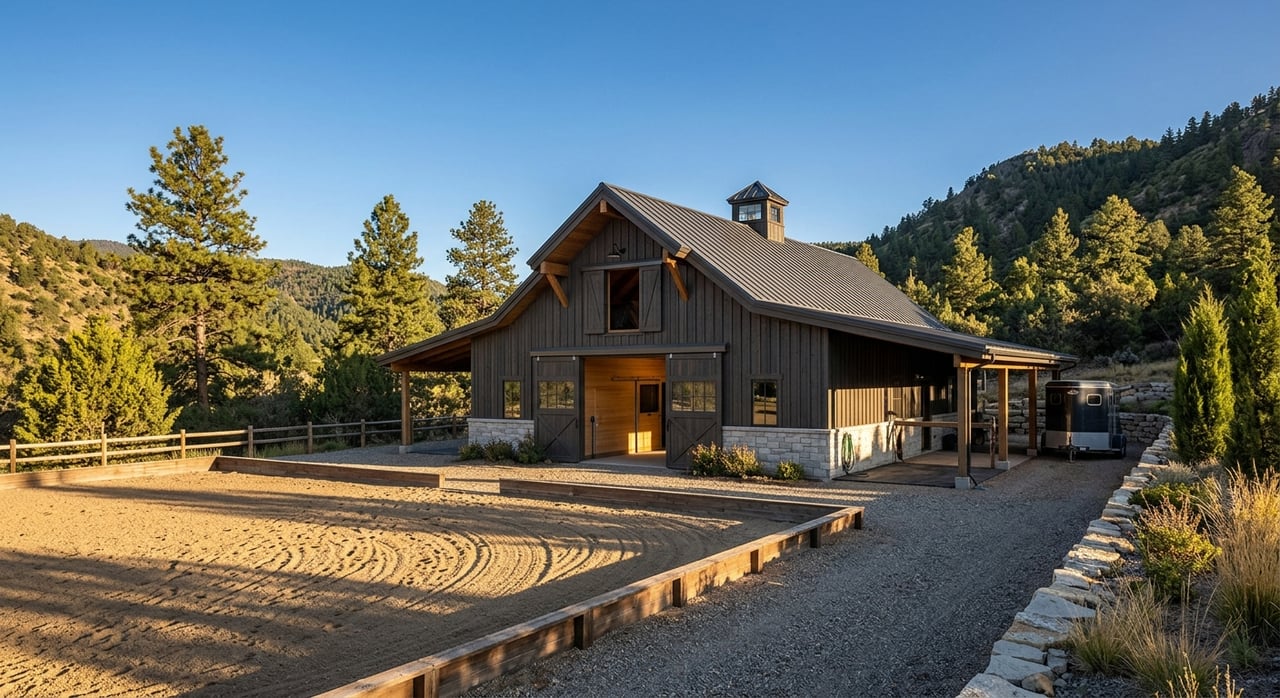
Sedalia is a much smaller micro-market with more estate and land-driven inventory. Homes there often compete on acreage, privacy, equestrian features, and custom construction rather than on neighborhood averages alone. That makes local comparables and direct buyer response especially important.
What buyers are really paying for
In both markets, luxury value goes well beyond interior finishes. Buyers may care just as much about lot size, setting, access, privacy, and specialty amenities as they do about kitchens or bathrooms.
Current Castle Rock inventory reflects this spread. Realtor.com feature filters include gated communities, swimming pools, horse stables, wooded land, ponds, RV or boat parking, and guest houses. Premium enclaves like Village at Castle Pines show a median listing price of $1.795 million, far above Castle Rock’s townwide median of $730,000.
Sedalia inventory shows a similar pattern, but often with even more land influence. Feature filters there include horse stables, large lots, low HOA, gated communities, and swimming pools. Horse-property examples ranged from about $975,000 to $3.9 million, with lot sizes from 5 acres to 44.22 acres.
That spread matters because buyers do not price these homes like standard suburban resales. A home on a large parcel with equestrian utility, gated access, or a highly private setting may compete with a very different set of alternatives than a home with similar interior square footage on a smaller lot.
Why price per square foot can mislead
Price per square foot can be a helpful reference point, but it should never be the whole strategy for a luxury home in Castle Rock or Sedalia. In custom and estate segments, that number can hide more than it reveals.
Sedalia’s median listing price per square foot is $471, compared with $227 in Castle Rock. That is a major gap, but it does not mean every Sedalia home should command a premium on a simple formula. The difference is influenced by acreage, custom construction, and limited comparable inventory.
This is why tract-home comps should be separated from estate-home comps. If your property includes features like large acreage, a guest house, horse facilities, or a gated setting, those details need market-supported adjustments. A raw square-foot calculation can miss the reasons a buyer would choose your home over another option.
What current market pace says about pricing
The right list price should reflect not only value, but also current buyer behavior. Even in a favorable market, overpricing can cost you momentum.
Castle Rock is still described by Realtor.com as a seller’s market in June 2026. At the same time, median days on market increased 34.21% year over year to 43 days, while the median listing price was flat and active listings were basically unchanged. That suggests buyers are still participating, but they are taking longer to decide and looking more carefully at value.
Sedalia is labeled a balanced market, and the numbers support a more selective buyer pool. With 72 median days on market and homes selling at about 95% of asking on average, buyers appear to be weighing condition, acreage, and setting very closely before making offers.
For sellers, the message is simple. The first price should be a strategic launch price, not a test balloon. In luxury real estate, your early market window matters, and serious buyers often know quickly when a home feels overpriced.
Why county averages are not enough
Douglas County data can offer useful context, but it should not drive the pricing decision by itself. Luxury buyers shop by micro-market, community, and property type.
Douglas County’s Q1 2026 report showed Castle Rock detached-home sales rising 2.1% year over year, while countywide detached sales fell 7.8%. The average detached sold price was $873,118 in Castle Rock compared with $857,893 countywide. That divergence is a good reminder that Castle Rock can outperform or behave differently from the county as a whole.
For a luxury seller, this means broad county numbers may be too blunt. A gated golf community, estate lot, or horse property should be measured against the best local substitutes, not just against countywide averages.
Why assessor values and AVMs fall short
Many sellers look first at an assessor value or an automated estimate. Those tools can be useful for broad context, but they are not the same as a market-ready list price.
Douglas County Assessor materials explain that residential property is valued using the market approach, with reappraisals every two years in odd-numbered years. The 2025 reappraisal used a June 30, 2024 appraisal date, and sales after that date could not be considered in that cycle. In other words, an official value may not reflect the most current buyer behavior or the latest local competition.
That gap becomes even more important in the luxury segment. Unusual homes, limited comparable sales, and highly specific buyer preferences can all reduce the usefulness of a broad automated estimate. For estate properties in Castle Rock and Sedalia, a tailored analysis is often the better path.
What a strategic luxury pricing analysis should include
A strong pricing strategy should account for more than recent sold prices. It should also reflect how your property will be perceived by the buyers most likely to purchase it.
A thoughtful luxury pricing review should include:
- The closest true comparable sales in the same micro-market
- Active competing listings buyers will compare against
- Property-specific features such as acreage, privacy, gated access, equestrian utility, guest accommodations, or amenity packages
- Expected buyer pool size for your price point
- Realistic days-on-market expectations based on current market pace
- Positioning for a strong launch rather than a later correction
This kind of analysis helps protect both visibility and negotiating leverage. When the price matches the market, buyers are more likely to engage early and view the property as a serious opportunity.
How strategic pricing supports stronger marketing
Pricing and marketing should work together. Even a beautifully presented listing can lose force if buyers feel the number does not match the offering.
For a luxury home, pricing strategy should support the story your marketing is telling. If the home offers land, privacy, architectural quality, or a rare lifestyle setup, the price should reinforce that value while staying grounded in the market. That balance helps attract qualified interest instead of casual curiosity.
This is especially important in Castle Rock and Sedalia, where the pricing range can be wide. Current Castle Rock gated-community listings span roughly $845,000 to $5.45 million. In markets with that kind of spread, presentation alone is not enough. The number has to make sense within the right competitive set.
What sellers should do before listing
Before you go live, it helps to answer a few practical questions. These answers often shape whether you price to lead the market, match it, or leave room for adjustment.
Ask yourself:
- What are the closest substitute properties a buyer would consider instead?
- Which features truly make this home rare in Castle Rock or Sedalia?
- Is the likely buyer seeking turnkey condition, land, privacy, or a specialty use?
- How long are comparable properties taking to attract offers?
- Does the list price invite action, or does it create hesitation?
The goal is not to chase the highest possible number on paper. The goal is to position your home where the right buyers can see its value and respond with confidence.
A smart pricing plan starts local
Luxury homes in Castle Rock and Sedalia deserve a pricing plan built around local realities, not generic formulas. These are markets where setting, land, buyer pool depth, and property uniqueness all shape the final result.
If you are preparing to sell, the best starting point is a custom analysis of your home’s micro-market, competition, and likely buyer response. That kind of guidance can help you avoid costly overpricing and launch with a strategy that fits today’s market. If you want a private, data-informed conversation about pricing your luxury home, connect with Ashley Behrens for a personalized consultation.
FAQs
How should you price a luxury home in Castle Rock?
- You should base the price on local comparable sales, active competing listings, unique property features, and current buyer pace in Castle Rock rather than relying on townwide averages alone.
Why is pricing a Sedalia luxury home different from pricing in Castle Rock?
- Sedalia has a smaller, more estate-focused market with fewer comparable sales, more acreage-driven value, longer median days on market, and a lower average sale-to-list ratio, so pricing usually needs even more customization.
Can you use price per square foot for luxury homes in Castle Rock and Sedalia?
- You can use it as one reference point, but it should not drive the full strategy because acreage, privacy, custom construction, and specialty amenities can affect value in ways that simple square-foot formulas miss.
Are Douglas County assessor values accurate for setting a list price?
- Assessor values can provide general context, but they are not the same as a market-ready list price because they follow a different valuation timeline and may not reflect current competition or recent buyer behavior.
What features most affect luxury home pricing in Castle Rock and Sedalia?
- Key factors often include acreage, privacy, gated setting, golf or estate community location, equestrian utility, guest accommodations, lot quality, and the overall condition and presentation of the home.