If you want room for horses without feeling far from daily life, Castle Rock and Sedalia deserve a close look. Many buyers love the idea of acreage, but the reality depends on more than land alone. You need to understand zoning, trail access, property layout, and how easily you can get to town when you need to. This guide will help you sort through those details so you can shop with more confidence. Let’s dive in.
Why Castle Rock and Sedalia Appeal
Castle Rock offers a mix that is hard to ignore if you want both open land and convenience. Town materials highlight more than 6,680 acres of preserved open space, a broad trail system, and a downtown with locally owned restaurants, shops, a museum, a brewery, and the Chamber and Visitors Center. For you as a buyer, that means acreage living can still stay connected to errands, dining, and recreation.
Sedalia feels different. Douglas County describes it as a rural-residential corridor where residential uses are balanced with nearby commercial and business uses that can reduce commuting. Just as important for horse owners, the Sedalia Community District specifically includes a principal use for a training facility for horses, riders, or both.
Together, these two areas support a lifestyle that can feel private and land-focused without fully giving up access to everyday needs. That balance is a big reason horse-property buyers keep Castle Rock and Sedalia on their short list.
What Makes Acreage Work Well
Acreage is not just about how many acres a parcel has. In Douglas County, how the land is zoned and laid out matters just as much. Household pets are allowed in residential districts, but kennels, boarding facilities, and commercial activities are not allowed there, and hoofed animals such as horses are regulated by animal units and parcel size.
That means two properties with similar acreage can function very differently. One may offer a workable setup for horses, while another may be limited by density rules, setbacks, or site design. If you are comparing homes, it helps to look beyond the listing description and focus on what the property can actually support.
Animal Density in Sedalia
In the Sedalia Community District, hoofed animals require at least one acre. The maximum density is one animal unit per half acre. If you are planning to keep horses on-site, these standards are a key starting point for evaluating whether a property fits your goals.
For some buyers, that may be enough for personal use and a simple barn setup. For others, especially if you want more flexibility in turnout or riding space, the practical fit may depend on the parcel’s shape and improvements as much as the acreage total.
Setbacks Shape the Feel
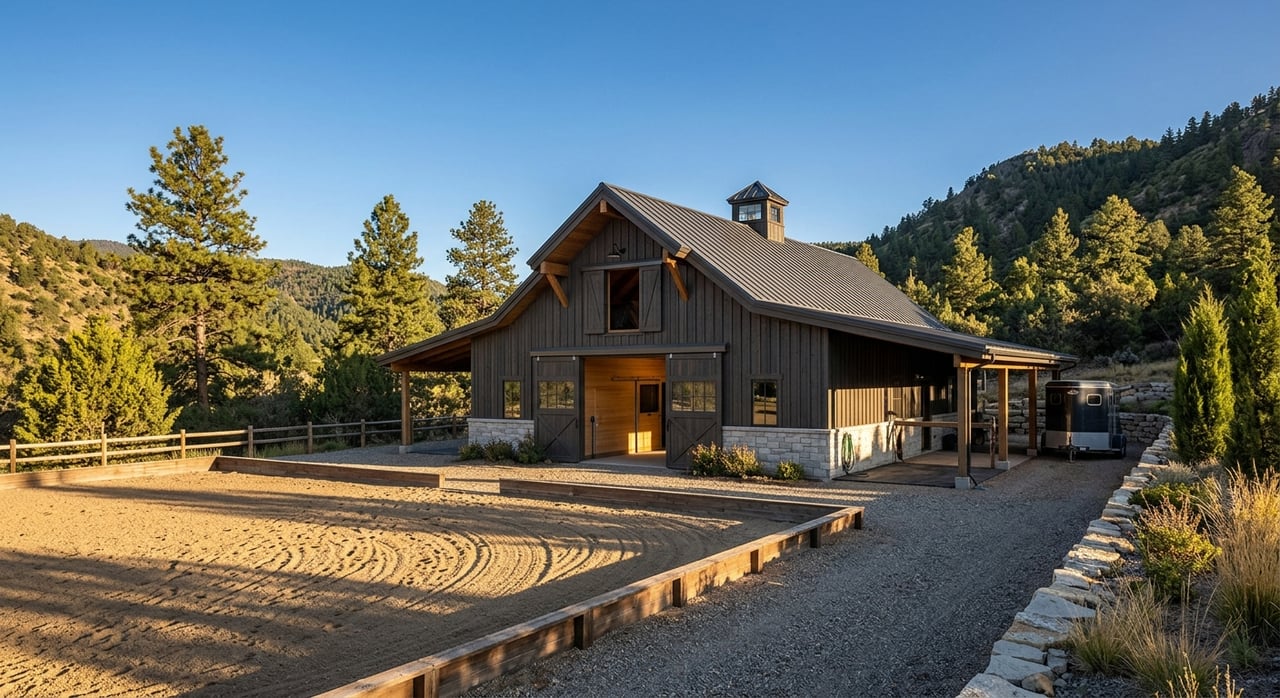
Douglas County requires larger setbacks for barns, corrals, arenas, paddocks, run pens, round pens, and parking areas as lot size increases. The county also requires vegetative groundcover, manure management, and drainage controls on land with livestock. These rules affect both function and feel.
If privacy matters to you, this is where smart due diligence pays off. A property’s comfort level often comes from how the structures, animal areas, and access points are arranged, not just from the number of acres on paper.
Fencing and Safety Matter
Fencing is another detail that can change your day-to-day experience. Douglas County allows electric fencing inside the lot for animal containment, prohibits hazardous materials such as barbed or razor wire, and requires fences, walls, and hedges to be maintained in safe condition and within height limits.
That makes fencing review an important part of any acreage search. You want to know what is already in place, what may need updating, and whether the existing layout supports your intended use.
Water and Wastewater Deserve Extra Attention
On rural properties, utility questions are never minor. In Sedalia, the zoning resolution expects central water and sanitation when available, but it also allows on-site wastewater treatment systems and, in limited cases, individual wells if county and district conditions are met.
For you, that means rural charm should always be matched with practical review. Water source, sanitation, and system capacity can all affect how smoothly a property functions over time.
Equestrian Trail Access Near Castle Rock and Sedalia
One of the biggest surprises for some buyers is that open space does not always mean horse access. Castle Rock’s trail guide states that the town currently has no properties designated for equestrian use, with Hidden Mesa Open Space, managed by Douglas County, identified as the local equestrian exception.
That is why trail rules matter. If riding access is a priority, you will want to verify where horses are actually allowed instead of assuming every nearby trail is available.
Hidden Mesa Open Space
Hidden Mesa offers a useful local option. According to the trail guide, it includes 6.8 miles of unpaved, moderately difficult trail where horseback riding is allowed.
The area also shows why local knowledge matters. The town’s broader trail materials remind users about bears, mountain lions, and rattlesnakes, and Hidden Mesa’s trail information lists wildlife that includes elk, pronghorn, black-tailed prairie dogs, and raptors.
Dawson Butte Ranch Open Space
Dawson Butte Ranch Open Space is one of the stronger nearby riding assets. Douglas County says the trail winds 5 miles through forest and meadow and includes optional bridle paths with more than 60 horse jumps. The property is open from one hour before sunrise to one hour after sunset.
For riders who want variety, this can be a compelling nearby feature. It offers a more horse-oriented experience than buyers may find on many general-use trail systems.
Pike Hill and Ringtail Trail
If you want a longer route, Pike Hill Open Space and the Ringtail Trail add another option. Douglas County says the Ringtail Trail is 7.2 miles and runs from the Sharptail and Roxborough side through Pike Hill to the Pike National Forest.
The county also notes that riders accessing from Sharptail Trailhead travel 5 miles on trails before reaching the east end of Ringtail. For some horse owners, that kind of connected trail distance is a major lifestyle advantage.
Trailer-Friendly Day Rides
Douglas County also points to larger trail systems that may appeal to riders who trailer out. The county’s open-space properties page says the Spruce Meadows parking lot is ideal for horse trailers, and Sandstone Ranch offers horseback use on a 12-mile trail in its eastern portion.
If you like to vary your rides, these options can widen your range well beyond your immediate neighborhood. That can add real value to acreage living, especially if your own property is more about turnout and care than full riding infrastructure.
Indoor Riding Backup
Weather and training schedules do not always cooperate. Douglas County’s Fairgrounds offer open riding in the indoor arena on selected days, schedule permitting, at $5 per horse or rider per session. Waivers are required, and no stalls are provided.
That kind of indoor fallback can be helpful when conditions outside are less predictable. It is one more piece of the local horse ecosystem that buyers often appreciate after move-in.
Boarding Options Add Flexibility
Not every horse buyer needs a fully built-out equestrian estate. Some buyers want acreage for privacy and lifestyle but still prefer professional boarding nearby. In Castle Rock and Sedalia, local boarding options create flexibility in how you live with horses.
In Castle Rock, Mariah Farms is described as a full-care boarding facility with daily turnout, an indoor arena, an outdoor arena, a round pen, and 35 acres to ride. Painted Glory Ranch describes itself as a small boarding facility, and Ranch of the Red Horse operates on 35 secluded acres with limited boarding.
In Sedalia, options include Pine Cliff Ranch with 3,500-plus acres of private ranch land and private riding access, Sedalia Valley Stables with 36 acres of private rideable land, Weston Valley Ranch with boarding, training, and trail riding, and Plum Creek Pastures with 150-plus acres of pasture, open-air board, trailer storage, and 24/7 monitoring.
For you, that means ownership does not have to look just one way. You might choose a property with modest on-site horse accommodations and rely on nearby boarding for training, turnout, or riding access.
Town Access Still Matters
Even if horses are the priority, daily convenience still counts. Castle Rock’s downtown offers the nearest concentration of common errands and leisure options, with locally owned dining and shopping, the museum and historic buildings, plus broader town amenities such as the Outlets at Castle Rock and the Promenade.
That access can make acreage living more comfortable over time. You may love the privacy of a rural parcel, but being able to reach town amenities without giving up your lifestyle is often what makes a property truly workable.
How to Evaluate an Acreage Property
When you tour acreage homes in Castle Rock or Sedalia, it helps to review them through a practical equestrian lens. The right property is rarely just the prettiest one. It is the one that supports how you plan to live day to day.
Here are a few smart questions to ask as you compare options:
- How is the parcel zoned, and how many hoofed animals can it support?
- Where could barns, corrals, paddocks, or arenas be placed under setback rules?
- What fencing is already installed, and does it meet your needs?
- How are manure management, drainage, and groundcover handled?
- Is water served centrally, or does the property rely on other approved systems?
- How close are you to horse-friendly trails, trailer parking, or boarding facilities?
- How easy is it to get to Castle Rock for everyday errands and services?
A thoughtful review can save you time and help you avoid buying land that looks good on paper but does not fit your goals in practice.
The Big Picture for Buyers
Castle Rock and Sedalia support a horse-centered lifestyle in different ways. Castle Rock tends to offer stronger day-to-day convenience with a substantial open-space system and town amenities, while Sedalia leans more rural-residential with zoning that directly accounts for horse and rider training uses.
For many buyers, the best choice comes down to your preferred balance of privacy, land function, riding access, and convenience. If you want acreage and equestrian living in Douglas County, these areas offer real opportunity, but the details matter.
If you are exploring acreage, equestrian, or estate-style property in this part of Colorado, working with an advisor who understands both lifestyle fit and property function can make the search much more focused. For a private conversation about the right setup for your goals, connect with Ashley Behrens.
FAQs
What makes Castle Rock appealing for acreage buyers?
- Castle Rock combines more than 6,680 acres of preserved open space, a broad trail system, and convenient town amenities such as dining, shopping, and recreation.
What makes Sedalia attractive for equestrian living?
- Sedalia offers a more rural-residential setting, and the Sedalia Community District specifically includes horse- and rider-training facilities as a principal use.
How many horses can you keep on property in Sedalia?
- In the Sedalia Community District, hoofed animals require at least one acre, with a maximum density of one animal unit per half acre.
Are all Castle Rock trails open to horseback riding?
- No. Castle Rock’s trail guide says the town currently has no properties designated for equestrian use, with Hidden Mesa Open Space identified as the local equestrian exception.
Where can riders find nearby equestrian trails around Castle Rock and Sedalia?
- Nearby options include Hidden Mesa Open Space, Dawson Butte Ranch Open Space, Pike Hill Open Space and Ringtail Trail, plus trailer-based riding access at places such as Spruce Meadows and Sandstone Ranch.
What should buyers check before purchasing an equestrian acreage property in Douglas County?
- You should review zoning, animal-density rules, setbacks, fencing, drainage, manure management, and water or wastewater setup to confirm the property supports your intended use.